• Skip to main content
  • Skip to primary sidebar
  • Skip to footer

YTA Training

  • YTA Courses
    • Tiling Courses
    • Plumbing Courses
    • Plastering Courses
    • Joinery & Carpentry Courses
    • Kitchen Fitting Courses
    • Multi-Skill Courses
  • NVQ Level 2
    • NVQ Lv 2 OSAT
    • NVQ Lv 2 EWPA
  • Videos
  • Info
    • Testimonials – YTA Reviews
    • Construction Training for Companies and Employ UK
    • Courses, Qualifications & NVQ’s
    • Accommodation
    • FAQ
    • T & C’s
    • Media & Press
    • MOD Resettlement Courses
    • Meet The Staff
    • Careers at YTA
    • Privacy Policy
    • Trade Course Special Offers
    • Top Offer
  • Blog
  • Trade Tool Shop
  • Contact
  • Cart

trade skills

16th August 2026 By YTA Training Team

Professional Tiling Courses Near Newcastle: Start Today

What if you could transition into a professional trade in less time than it takes to renew a passport? Many career changers in the North East are searching for tiling courses near Newcastle but find themselves discouraged by the prospect of spending years at a local college. It shouldn’t take a multi-year diploma to master the physical skills required for site work.

We understand that you need a practical, efficient route into the industry that respects your time and financial goals. It’s entirely possible to gain professional skills and learn how to become a tiler in just 5 to 10 days. This approach prioritises hands-on workshop time over classroom theory.

This guide will break down the intensive curriculum, realistic salary prospects in the North East, and the path to achieving an NVQ Level 2. You’ll discover how a short investment in tactile learning can lead to a lifetime of career stability and professional earning potential.

Key Takeaways

  • Discover how to transition from a total beginner to a professional tiler in as little as 5 to 10 days through intensive, hands-on training.
  • Compare the benefits of fast-track tiling courses near Newcastle against traditional two-year college diplomas to see which fits your career goals.
  • Learn about the current demand in the North East construction sector and how experienced tilers can command rates of £25 per hour.
  • Understand the straightforward pathway to achieving an NVQ Level 2 and securing the CSCS card required for commercial site work.
  • See why a “no classroom” approach with small class sizes ensures you gain the physical, tactile skills needed for a high-quality finish.

Table of Contents

  • Why Choose Intensive Tiling Courses Near Newcastle?
  • What to Expect from a 5-Day or 10-Day Intensive Tiling Course
  • Comparing Newcastle Colleges vs. Fast-Track Training Centres
  • Tiler Salary and Career Prospects in the North East
  • Training Options at YTA Training

Why Choose Intensive Tiling Courses Near Newcastle?

Intensive tiling training is a concentrated program designed to get you site-ready in a fraction of the time required by a standard NVQ diploma. While many look for tiling courses near Newcastle, they often find that local colleges focus on two-year apprenticeships tailored for school leavers. This doesn’t work for adults who need to start earning immediately.

Fast-track training removes the academic "fluff" and focuses entirely on the physical skills required to complete a professional job. It is an ideal solution for career changers who cannot afford to spend years in a part-time educational setting. You trade the long-term classroom commitment for a high-intensity, workshop-based environment.

Choosing 5-day or 10-day blocks allows you to plan your career transition with precision. You can take a single week of holiday from your current job and return with a completely new skill set. This efficiency is why many people from across the North East are now looking beyond their immediate doorstep for trade training.

Tiling courses near Newcastle

The Problem with Traditional College Routes

Traditional college courses are often spread over one or two years. They are designed to meet government funding requirements rather than the needs of a working adult. This often results in a curriculum filled with "filler" content and theory-heavy modules that keep you away from the tools for weeks at a time.

For someone based in Newcastle, the lack of flexibility in these local diplomas is a major hurdle. Most require attendance during standard working hours, making it impossible to maintain a current income while retraining. There is also no guarantee of small class sizes, meaning you might be one of twenty students competing for an instructor’s attention.

The Fast-Track Advantage for Career Changers

Intensive courses condense years of sporadic learning into days of constant, practical application. You’ll spend your time in a dedicated tiling bay working with different types of tiles, from ceramic to porcelain. This "learning by doing" approach is far more effective for practical trades than sitting in a classroom.

While YTA Training is based in Bradford, the two-hour drive from Newcastle via the A1 and M62 is a strategic investment. Many students find that an intensive tiling course provides more hands-on experience in one week than a whole term at a local college. It’s about valuing your time and ensuring every hour spent training contributes to your future earning potential.

5 Day Tiling Courses What Youll Learn Key Skills Hero Image

What to Expect from a 5-Day or 10-Day Intensive Tiling Course

You don’t need a background in construction to enrol in professional tiling courses near Newcastle. These intensive programmes are built for beginners, taking you from zero experience to a competent level of skill in a very short window. By working in small groups of no more than six students per instructor, you receive the direct, one-on-one feedback necessary to master the trade.

The training environment replicates real-world scenarios. You will use professional-grade tools, various adhesives, and multiple tile materials. According to the National Careers Service, tilers must have a keen eye for detail and strong practical skills. This hands-on approach ensures you develop those traits through repetitive, physical practice rather than just reading about them.

The 5-Day Intensive Curriculum

The 5-day course is a fast-track into the industry. It focuses on the core mechanics of wall and floor tiling that you’ll encounter in domestic homes across the UK.

  • Day 1-2: You’ll start with setting out and surface preparation. This includes learning how to use manual and electric cutters for basic techniques and understanding how to keep your work level and square.
  • Day 3-4: The focus shifts to complex areas. You will practice tiling around windows, sockets, and obstacles, alongside mastering floor tiling basics and adhesive selection.
  • Day 5: The final day covers grouting, cleaning, and professional finishing. Instructors also provide essential business advice for those looking to start their own business or find work in the trade.

The 10-Day Professional Path

The 10-day option is for those who want a deeper level of accreditation and confidence. It builds on the first week but introduces more technical challenges that tilers face on professional sites.

In the second week, you will tackle advanced patterns and large-format tiles. You will also learn about tanking systems, which are vital for wet rooms and modern bathroom installations. This course prepares you for a NOCN Cskills Level 1 qualification, providing a recognised credential for your CV. It’s an ideal way to prove your competency to employers or clients.

If you’re ready to see how these dates align with your career plans, you can check course availability here for upcoming sessions.

The goal is to move past theory. By the end of the 10 days, you’ll be comfortable working in complex bathroom layouts and ready for site conditions. This intensity ensures you aren’t just watching a demonstration; you are doing the work yourself in every single session. You’ll leave with the confidence to take on your first paid job, whether that’s a kitchen splashback or a full bathroom renovation.

Comparing Newcastle Colleges vs. Fast-Track Training Centres

Choosing between a local college and an intensive training centre is a decision between long-term study and immediate career entry. A standard diploma at a college in the North East typically requires a two-year commitment. In contrast, intensive tiling courses near Newcastle allow you to reach a professional standard in just two weeks. This massive difference in time isn’t just about convenience; it is about your earning potential.

Traditional colleges often include classroom-based theory that isn’t directly applicable to the physical act of tiling. At an intensive centre, you spend 100% of your time with tools in your hand. Recent construction industry statistics indicate that the sector is growing, meaning every month you spend in a classroom is a month of lost income. When you factor in two years of tuition fees versus two weeks of training, the fast-track route is the logical financial choice.

Accreditation and Qualifications

It’s vital to distinguish between basic "taster" sessions and accredited training. We focus on Cskills qualifications which are recognised by employers across the UK. For those with existing experience or those who have completed our courses and moved into the trade, the EWPA route provides a fast-track way to achieve an NVQ Level 2. This is the industry standard required for a Blue Skilled Worker CSCS card.

Newcastle employers prioritise practical competence over theoretical knowledge. They need tilers who can prep a surface, set out a room, and finish a job to a high standard without constant supervision. Gaining an accredited qualification in a short window proves you have the discipline and technical skill to handle professional site conditions immediately.

Learning Environment: Workshop vs. Classroom

The "no classroom" philosophy ensures you retain skills faster through muscle memory and repetitive practice. You aren’t competing for an instructor’s attention in a class of twenty students. With a maximum of six students per instructor, every cut and every tile you lay is checked and corrected in real-time. This level of individual feedback is simply not possible in a large college setting.

This supportive environment helps build the confidence needed to transition from a different industry into construction. You can check course availability and dates here to see how quickly you can start your journey. Moving from Newcastle to our Bradford centre for a week is a small trade-off for the intensity and quality of instruction you’ll receive.

Professional Tiling Courses Near Newcastle: Start Today

Tiler Salary and Career Prospects in the North East

Earning potential is a primary driver for anyone considering tiling courses near Newcastle. In the North East, the financial rewards for skilled tradespeople are significant. As of August 2026, commercial contracts for ceramic tilers in Newcastle upon Tyne offer pay rates of approximately £25.00 per hour under the Construction Industry Scheme (CIS).

Demand is split between steady domestic renovations and larger commercial projects. While domestic work offers consistent local leads, commercial sites often require higher technical speed and specific site credentials. For many, the most lucrative path is combining tiling with other skills. Adding tiling to your repertoire after completing plumbing courses allows you to take on full bathroom fit-outs, significantly increasing your project value.

Across the UK, a realistic salary range for consistently booked tilers sits between £31,000 and £45,000. You can find a more detailed breakdown of regional variations and experience levels in our tiler salary UK guide. This data highlights why the initial investment in professional training pays for itself within just a few months of active work.

Earning Potential in Newcastle

Self-employed tilers in the North East typically command day rates between £170 and £240. Your take-home pay depends heavily on your speed and the complexity of the materials used, such as natural stone or large-format porcelain. The home renovation market in Newcastle remains robust, driven by a growing demand for high-quality kitchen and bathroom finishes.

Experienced tilers with over a decade of experience can see their annual earnings exceed £45,000. For those just starting out, focusing on domestic "splashback" jobs and small floor areas is an excellent way to build speed. As your efficiency improves, you can complete jobs faster without sacrificing the quality of the finish, which directly impacts your daily profit margins.
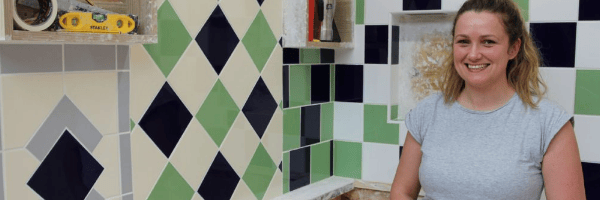
Tiling course near Newcastle

How to Become a Tiler in the UK

The journey from a beginner to a professional involves more than just learning to cut tiles. You must follow a structured path that includes intensive training, building a portfolio, and securing local reviews. For a step-by-step breakdown of this process, read our comprehensive guide on how to become a tiler UK.

Success in the trade relies on your reputation. Once you finish your training, start by documenting every project with high-quality photos to show prospective clients. This visual proof of your "tactile, physical learning" is what will win you contracts over cheaper, less-skilled competition. Building a solid local presence in Newcastle will ensure a steady stream of word-of-mouth recommendations.

If you are ready to secure these earnings for yourself, view our upcoming course dates to begin your career transition.

Training Options at YTA Training

YTA Training stands as a specialist centre for those seeking a direct route into the trades. Although our facility is located in Bradford, West Yorkshire, we regularly welcome students looking for tiling courses near Newcastle. The two-hour drive via the A1 and M62 is a strategic step for anyone serious about high-quality, professional instruction.

We focus on a beginner-friendly environment where class sizes are strictly limited to a maximum of six students per instructor. This ensures you aren’t just another face in a crowded room. Our "tactile, physical learning" approach means you’ll be on your feet and using tools from the first hour, replicating the conditions of a real-world job site.

Many of our North East students choose to stay in local accommodation nearby, allowing them to fully immerse themselves in the training for the duration of the course. This commitment to intensive learning is what allows our students to bypass years of college and move straight into the industry with confidence.

Intensive Tiling Course – 5 Days

The 5-day tiling course is perfect for DIY enthusiasts or those wanting to test the waters of a new career. It’s a high-intensity week that covers the core mechanics of wall and floor tiling, from surface preparation to final grouting.

The current price for this course is £700 including VAT. Please be aware that this will increase to £750 from October 2026 due to rising material costs. It provides all the essential skills required to start tiling professionally on domestic projects, such as kitchen splashbacks and standard bathroom floors.

Intensive Tiling Course – 10 Days

For those serious about a full career change, the 10-day professional path is the comprehensive choice. This course builds on the foundational skills of the first week and introduces more complex patterns and technical challenges found on commercial sites.

This route includes the CITB Cskills Level 1 accredited qualification, which serves as a formal marker of your competence. It also provides the necessary foundation for students who eventually want to move toward an NVQ Level 2 qualification. You’ll leave with the credentials and the physical skill set to handle diverse site conditions and demanding client requirements.

Start Your New Career in Tiling Today

Transitioning into a trade doesn’t have to be a multi-year struggle. By choosing intensive tiling courses near Newcastle, you can move from a total beginner to a site-ready professional in just 5 to 10 days. This fast-track approach focuses entirely on hands-on training, ensuring you spend your time with tools rather than textbooks.

As a CITB Cskills Accredited Centre, we provide the formal credentials and practical experience needed to succeed in the North East’s growing construction sector. Our commitment to small class sizes, with a maximum of six students per instructor, means you receive the expert guidance necessary to master complex patterns and high-end finishes. This beginner-friendly environment is designed to build your confidence through tactile, physical practice.

Whether you’re looking to start your own business or secure a role on a commercial site, the path is clear. It’s time to trade the classroom for the workshop and start earning a professional tiler’s wage. View upcoming 5-day and 10-day tiling course dates and take the first step toward your new career today.

Frequently Asked Questions

How long does it take to become a professional tiler?

You can develop the core physical skills required to work professionally in as little as 5 to 10 days. While full mastery takes time on the job, intensive training allows you to bypass the two-year wait associated with traditional college diplomas. By focusing on repetitive, hands-on practice, you build the muscle memory needed to complete domestic tiling projects to a commercial standard within a fortnight.

Can I learn tiling in 5 days if I have no experience?

Yes, intensive courses are specifically built for beginners and career changers. You don’t need any prior construction background to start learning. Because classes are limited to six students per instructor, you receive the individual guidance necessary to master cutting, setting out, and surface preparation. This concentrated approach ensures you are doing the work yourself rather than just watching a demonstration.

Do I need a CSCS card to work as a tiler in the UK?

You need a CSCS card to work on any formal construction or building site in the UK. While domestic jobs in private homes don’t strictly require one, having a card proves your professional competence to clients. To secure a Blue Skilled Worker card, you’ll need to achieve an NVQ Level 2, which we facilitate through our accredited training pathways and EWPA assessments.

Is it worth travelling from Newcastle to Bradford for tiling training?

Making the trip from the North East is a logical choice for those prioritising speed and quality in their search for tiling courses near Newcastle. The commute via the A1 allows access to a specialist environment dedicated to intensive, workshop-based instruction. Most students find that five days of concentrated practical work in Bradford delivers more value than several months of theory-based learning at a traditional local college.

Article by

YTA Team

The YTA Training Team are experienced trades training professionals based in the UK, specialising in hands-on courses in plumbing, plastering, tiling, carpentry and kitchen fitting.

With a focus on practical, fast-track learning, YTA Training has helped thousands of students gain real skills and confidence to start a new career in the trades. Courses are designed for beginners, with 5-day and 10-day options available, including qualifications.

Filed Under: YTA Tagged With: become a tiler, career change, construction training, Newcastle, North East, NVQ Level 2, tiling courses, trade skills

6th August 2026 By YTA Training Team

Plumbing Qualifications UK: Your Guide to Certification

Table of Contents

  • Understanding Plumbing Qualifications in the UK: An Overview
  • Level 1 vs. Level 2 vs. NVQ: What Do the Numbers Mean?
  • Fast-Track Training vs. Traditional Apprenticeships
  • The Step-by-Step Roadmap to Becoming a Qualified Plumber
  • Training Options at YTA Training

Article by

YTA Team

The YTA Training Team are experienced trades training professionals based in the UK, specialising in hands-on courses in plumbing, plastering, tiling, carpentry and kitchen fitting.

With a focus on practical, fast-track learning, YTA Training has helped thousands of students gain real skills and confidence to start a new career in the trades. Courses are designed for beginners, with 5-day and 10-day options available, including qualifications.

Plumbing Qualifications UK: Your Guide to Certification

Filed Under: YTA Tagged With: become a plumber, career change, City & Guilds, NVQ, plumbing, plumbing courses, trade skills, UK Trades

3rd August 2026 By YTA Training Team

Best Tiling Course For Beginners: Your Qualification Guide

You don’t need years of apprenticeship or a university degree to become a professional tiler. You can gain the hands-on confidence to start earning a living in the trade in as little as five days. Finding the Best Tiling Course For Beginners is about cutting through the noise of classroom theory and getting your hands on a trowel immediately.

It’s common to worry about wasting money on a course that’s too theoretical or feeling confused by the difference between Cskills and NVQ Level 2. When you’re balancing a career change with current work, you need training that respects your time and focuses on results.

This guide will show you exactly how to choose a course that transforms you from a novice into a site-ready professional. You’ll discover how to master the tools and start your new career or professional DIY project in just 5 to 10 days.

We’ll explore the essential qualifications you need, explain the practical approach of West Yorkshire’s top training centres, and outline the fastest path to earning money as a tiler.

Key Takeaways

  • Identify the Best Tiling Course For Beginners by prioritising intensive, hands-on instruction over slow-paced, theoretical college routes.
  • Understand the difference between basic DIY taster sessions and official Cskills or NVQ Level 2 qualifications required for UK construction site work.
  • Learn why 5-day and 10-day intensive programmes are the most efficient way to gain the physical skills needed to start earning as a tiler.
  • Discover how to choose a reputable training centre in West Yorkshire that provides dedicated tiling bays and expert industry mentorship.

Table of Contents

  • Finding the Best Tiling Course For Beginners in the UK
  • DIY vs. Professional Accreditation: Which Path Should You Take?
  • Intensive 5-Day vs. 10-Day Tiling Courses: What to Expect
  • Choosing the Right Training Centre in West Yorkshire
  • Training Options at YTA Training

Finding the Best Tiling Course For Beginners in the UK

The Best Tiling Course For Beginners should provide a complete toolkit of skills, not just a basic demonstration. It starts with mastering surface preparation, understanding different substrates, and the critical art of "setting out" to ensure tiles are symmetrical and level. You need to know how to handle various adhesives and how to select the right grout for specific environments.

Traditional long-term college routes are increasingly being replaced by intensive short courses. While a college course might take two years of part-time study, an intensive programme gets you on your feet in days. This shift is driven by a need for efficiency and a focus on practical, site-ready skills that employers and homeowners actually value.

Most students fall into one of two categories: DIY enthusiasts wanting to master professional techniques or career changers looking for a fast-track entry into the trade. The ideal beginner course balances the speed of intensive training with the rigour of accredited industry standards.

Why a Hands-On Approach Matters for New Tilers

You can’t learn the physical nuances of a trade from a screen or a book. Understanding the history and use of tiles helps you appreciate different materials, but only physical practice builds the muscle memory needed for precise cutting and laying. You need to feel how much pressure to apply when using a manual cutter and how to guide a tile through an electric wet saw safely.

Working in a simulated site environment, such as the dedicated bays at YTA Bradford, allows you to make mistakes and correct them under expert supervision. This tactile experience is vital for developing the confidence to handle expensive materials on a real job site. It’s about moving beyond theory and getting your hands dirty in a controlled, supportive setting.

Career Potential and Tiler Salaries in 2026

The UK construction sector faces a persistent shortage of skilled tradespeople. This high demand translates into excellent earning potential for those who can prove their competence. Taking a course is the first step in learning how to become a tiler in a competitive market where quality workmanship is always in short supply.

According to current industry data, the tiler salary UK reflects the value of specialised skills. A solid beginner course provides the foundation you need to start charging professional rates and building a reputation for quality work in West Yorkshire and beyond. Whether you are in Leeds or Bradford, the opportunity for a stable, well-paid career in tiling has never been clearer.

DIY vs. Professional Accreditation: Which Path Should You Take?

Choosing the Best Tiling Course For Beginners depends entirely on your end goal. There is a significant difference between a basic "taster" session and a qualification-led programme. If you simply want to tile your own kitchen, a short DIY course provides the basic techniques. However, if you intend to charge customers for your work, you need a path that leads to formal accreditation.

In the UK construction industry, "Accredited" refers to training that is monitored and approved by official awarding bodies like CITB or Cskills. These organisations ensure the training centre maintains high standards of instruction and safety. Many beginners worry that intensive short courses aren’t recognised by employers, but this is a common misconception. As long as the centre is accredited, the certificates you earn carry genuine weight in the industry.

Professional tilers need more than just the ability to stick a tile to a wall. You need to understand technical specifications, adhesive chemistry, and health and safety regulations. You can explore our full range of trade courses to see how we bridge the gap between basic skills and professional standards.

Understanding Cskills and NVQ Level 2

Cskills units act as a formal recognition of your skills within a controlled workshop environment. They are excellent for beginners because they provide a structured way to prove your competence in specific tasks, such as wall tiling or floor tiling. These units are often the first step toward a full career in the trades.

To work on most major UK construction sites, you will eventually need an NVQ Level 2. This qualification is not achieved through a training course alone; it requires an on-site assessment of your work in a real-world environment. By starting with an accredited course, you gain the technical foundation required to pass these assessments later. Reviewing the standards for Cskills qualifications  highlights the level of detail and precision expected of a professional. You can find more details on our courses and qualifications page to plan your progression.

When is a DIY Course Enough?

A DIY-focused course is sufficient if your project scope is limited to your own home. These courses are perfect for learning how to tile a splashback or a small bathroom floor without the pressure of professional deadlines. You’ll gain the confidence to use the tools correctly and achieve a clean finish on your own property.

The limitation of a DIY path is the lack of professional benefits. Without accreditation, you cannot obtain a CSCS card for site access, and you may find it difficult to secure professional indemnity insurance. If you have any ambition to turn your skills into a business, an accredited route is the only sensible choice. You can check course availability here for both our intensive DIY and professional career-start options.

Intensive 5-Day vs. 10-Day Tiling Courses: What to Expect

When searching for the Best Tiling Course For Beginners, you’ll typically find two primary options: the 5-day intensive and the 10-day professional programme. Both are designed specifically for people with zero previous experience. You don’t need to have held a trowel before to succeed in these environments.

The 5-day course is a concentrated burst of learning that covers the essential mechanics of the trade. It’s perfect for those who want to tackle ambitious home renovations or add basic tiling to an existing handyman business. You’ll leave with the ability to complete standard wall and floor projects to a professional standard.

The 10-day course builds directly on that foundation by adding a second week of advanced training. This path is the gold standard for career changers. It provides the extra time needed to master complex layouts and increase your working speed, which is vital for profitability when you’re working for customers.

The 5-Day Intensive Tiling Syllabus

The first five days focus on the core skills required for every tiling job. You’ll spend your time in a dedicated bay, learning how to prepare different surfaces and set out your tiles so they look symmetrical. Precision is the priority here, ensuring you avoid the common mistakes that ruin a bathroom’s finish.

A major part of the week involves mastering tools. You’ll learn to use manual rail cutters for straight lines and electric wet saws for more intricate shapes. You can find out more about this entry-level route by looking at our intensive tiling course 5 days.

Key skills covered in the first week include:

  • Setting out walls and floors for perfect symmetry.
  • Applying adhesives and selecting the correct trowel notch size.
  • Cutting tiles safely around sockets, pipes, and corners.
  • Grouting and finishing techniques for a waterproof seal.
  • Tiling a kitchen and window with trims
  • Tiling a bathroom above bath and around shower pipes
  • Tiling a floor with obstacles

The 10-Day Professional Tiling Path

The second week shifts the focus from "how to tile" to "how to be a tiler." You’ll tackle larger areas, advanced tiling techniques, including tiling the sloping wet room shower tray area. This week is where you’ll learn to handle complex patterns like diamond sets or herringbone, which are often high-value requests from clients.

We also cover the business management side of the trade. You’ll learn how to measure a room accurately, calculate material wastage, and provide professional quotes. Understanding Cskills tiling qualifications standards ensures your work meets national expectations from day one.

By the end of the 10 days, you’ll have the confidence to launch your own business. It’s a comprehensive roadmap for anyone researching how to become a tiler UK. You’ll be ready to take on paid work with the technical and commercial knowledge to back up your skills.

Best Tiling Course For Beginners: Your Qualification Guide

Choosing the Right Training Centre in West Yorkshire

Selecting the right environment is just as important as the syllabus itself. The Best Tiling Course For Beginners should offer more than just a bench in a shared workshop. You need a space that replicates the challenges of a real home, with corners, pipes, and uneven surfaces to navigate.

Small class sizes are a non-negotiable requirement for any high-quality centre. As a beginner, you’ll have dozens of questions about adhesive mixing or tile alignment. If an instructor is stretched across twenty students, you won’t get the immediate corrective feedback needed to avoid developing bad habits.

Social proof remains the most reliable way to judge a facility before you book. Look for centres where former students specifically mention their transition into the trade or the quality of the instruction. Reputable training centres will always be transparent about their track record and student outcomes.

Training Facilities: What a Good Centre Looks Like

A professional training centre should provide individual tiling bays for every student. These bays simulate real-world rooms, allowing you to practice "cutting in" around fixed obstacles rather than just laying tiles on a flat board. At YTA’s Bradford centre, we prioritise this tactile, physical learning approach to build true confidence.

You should also expect all professional tools and materials to be provided as part of the course. Learning on the same equipment used by trade professionals ensures there are no surprises when you reach your first job site. You can view our full range of trade training options to see how we equip our students for success.

Accessibility for Leeds and West Yorkshire Students

Location is a practical consideration for anyone balancing intensive training with other commitments. Finding tiling courses in Bradford provides a central hub for students across West Yorkshire. Our centre is easily accessible via major road and rail links from Leeds, Halifax, and Huddersfield.

Choosing a local, reputable centre saves on travel time and allows you to focus entirely on gaining your new skills. We encourage all prospective students to read through our YTA reviews to hear directly from people who have successfully launched new careers across the region.

Training Options at YTA Training

YTA Training is the serious, no-nonsense choice for anyone looking to gain real-world vocational skills quickly and effectively. We provide the Best Tiling Course For Beginners by focusing on physical, tactile learning. Our intensive programmes are designed to get you site-ready in a fraction of the time compared to traditional routes.

Our centre in Bradford operates as an accredited CITB and Cskills training facility. This status ensures that our curriculum and instruction methods are regularly audited for quality. When you train with us, you are gaining skills that the UK construction industry recognises and respects.

We offer three core pathways for beginners:

  • The 5-Day Intensive Wall and Floor Tiling Course for essential trade skills.
  • The 10-Day Professional Tiling Course, which includes the Cskills Level 1 qualification.
  • Advanced NVQ Level 2 assessment routes for those progressing to professional site work.

Fast-Track Your Tiling Career in Bradford

You don’t need any previous experience or a background in construction to join us. We start from the absolute basics, ensuring you understand how to use every tool safely and effectively. This practical approach means you spend your time tiling, not just watching demonstrations or reading manuals.
This "ground up" philosophy is vital when learning any complex skill; for example, even in specialized fields like equine handling, an education-first approach like the one at texaseeh.com is key to building proper foundations.

Our 10-day Level 1 Accredited course includes specific NOCN Cskills assessment units. This qualification is a formal way to prove your skill level to potential employers or customers. It acts as a vital stepping stone for those who eventually want to move toward an NVQ Level 2 and full site accreditation.

All materials, including professional-grade adhesives, grouts, and various tile types, are provided as part of your course. You will work in your own dedicated tiling bay, which replicates the corners and obstacles found in real bathrooms and kitchens. Our location is ideal for students looking for tiling courses Yorkshire, serving Leeds and the surrounding areas.

Book Your Tiling Course Today

We keep our class sizes small to ensure you get the instructor time you deserve. This mentor-led environment allows you to ask questions freely and receive immediate feedback on your technique. It’s this level of personal support that helps our students build confidence so quickly.

We encourage anyone considering a career change to come and see our facilities for themselves. We offer a friendly, professional atmosphere where your success is the primary goal. You can view upcoming 5-day and 10-day course dates and secure your place through our website today.

Launch Your New Career in Tiling Today

Choosing the Best Tiling Course For Beginners is the first step toward gaining financial independence and a valuable physical skill. You’ve seen how intensive 5 and 10-day programmes cut through the filler of traditional college routes to get you site-ready quickly. The right training balances speed with the rigour of accredited industry standards.

By focusing on tactile, physical learning in individual bays, you’ll build the muscle memory required for professional-standard work. Our accredited Cskills and CITB centre ensures every minute of your training meets high industry standards. You’ll learn from expert instructors with real trade experience who know exactly what customers expect on a modern job site; for an example of these professional standards in action, you can visit Express Tiling Limited.

It’s time to stop researching and start doing. Whether you’re based in Leeds, Bradford, or anywhere across West Yorkshire, a rewarding new career is well within your reach. Take the leap and gain the confidence to handle any tiling project with precision.

View upcoming 5-day and 10-day tiling course dates

Frequently Asked Questions

Can a beginner really learn to tile in just 5 days?

Yes, intensive training is designed to build essential physical skills through constant practice. The Best Tiling Course For Beginners focuses on hands-on application in a workshop rather than classroom-based theory.

By spending eight hours a day in a dedicated tiling bay, you develop the muscle memory required for precise cutting and laying. This concentrated format is often more effective for beginners than spread-out, part-time college courses.

What is the difference between a DIY course and an accredited qualification?

A DIY course teaches you how to tile your own home projects, such as a small bathroom or kitchen splashback. An accredited qualification, like a Cskills Level 1, is an official recognition of your skills by a national awarding body.

If you intend to work for customers or on construction sites, you must choose an accredited route. This provides the foundation needed to eventually achieve an NVQ Level 2, which is the industry standard for professional tilers.

Do I need to bring my own tools to the training centre?

No, all professional tools and materials should be provided as part of your course. This includes manual rail cutters, electric wet saws, and high-quality adhesives and grouts.

Learning on professional-grade equipment ensures you are prepared for the reality of a job site. It also allows you to test different tools before deciding which ones to purchase for your own toolkit.

What is the average salary for a tiler in the UK?

The earning potential for tilers remains high due to a significant shortage of skilled tradespeople across the country. While rates vary by region, a qualified professional can expect to earn a competitive daily rate.

Self-employed tilers often have the highest earning potential as they can set their own prices based on the complexity of the project. Starting with a solid training foundation is key to building the reputation needed to command these rates.

Article by

YTA Team

The YTA Training Team are experienced trades training professionals based in the UK, specialising in hands-on courses in plumbing, plastering, tiling, carpentry and kitchen fitting.

With a focus on practical, fast-track learning, YTA Training has helped thousands of students gain real skills and confidence to start a new career in the trades. Courses are designed for beginners, with 5-day and 10-day options available, including qualifications.

Filed Under: YTA Tagged With: career change, DIY Tiling, learn tiling, NVQ, tiling course, tiling qualifications, trade skills, west yorkshire

22nd July 2026 By YTA Training Team

Common Plastering Mistakes to Avoid: A Beginner’s Guide

Most beginners believe the secret to a perfect wall is all in the wrist, but the truth is that a professional finish is won or lost in the bucket before you even pick up a trowel. Understanding the common plastering mistakes beginners make is the difference between a glass-smooth surface and a patchy, uneven mess that requires hours of sanding.

We know how discouraging it feels when your plaster dries too quickly or stubborn trowel marks ruin your hard work. It’s a physical, fast-paced trade that demands precise timing and a clean workspace, which can feel overwhelming when you’re starting out in your own home or looking to change careers.

This guide will help you master the art of skimming by highlighting the technical errors that frequently derail DIY projects. You’ll learn how to manage your mix, get the timing right, and gain the confidence to take on a full room with professional results.

With the UK plastering industry valued at over £3.2 billion, there’s never been a better time to learn these skills properly at our training centre in Bradford, West Yorkshire. Let’s look at how to avoid the pitfalls and get your project back on track.

Key Takeaways

  • Learn why thorough surface preparation and managing wall suction are critical for preventing your plaster from drying out too quickly.
  • Master the ‘Goldilocks’ mix consistency by always adding plaster to water to avoid lumps and contamination in your bucket.
  • Identify the common plastering mistakes beginners make with trowel angles to prevent “digging in” and leaving unsightly marks on your finish coat.
  • Understand the crucial timing of the setting process and why controlling draughts is essential for achieving a glass-smooth result.
  • Discover how intensive, hands-on training can fast-track your skills and correct bad habits in a real-world environment.

Table of Contents

  • The Foundation: Preparation and Tool Selection Mistakes
  • Getting the Mix Right: Consistency and Contamination
  • Application Technique: Pressure, Angles, and Overworking
  • The Crucial Timing: Rushing and Environmental Factors
  • Training Options at YTA Training

The Foundation: Preparation and Tool Selection Mistakes

Preparation determines 90% of your final plastering success. If the background isn’t right, the finish will never be smooth. Most beginners rush this part because they want to get the plaster on the wall, but that’s often where the project fails before it starts.

One of the most Common Plastering Mistakes Beginners Make is failing to clean the workspace properly. Even a single grain of grit on your hawk or in your bucket will leave a long scratch across your wall during the final skim. You must ensure every tool and surface is spotless before you open a bag of Plaster.

Skipping Suction Control and Surface Prep

Suction control is the management of how fast a wall absorbs moisture from the plaster. If a wall has “high suction,” it’ll drink the water out of your mix instantly. This leaves you with a dry, unworkable slab that won’t stick or smooth out.

You can test wall suction with a simple water spray test. If the water disappears into the brickwork or old plaster immediately, you have a suction problem. You’ll need to apply a PVA bonding agent to seal the surface and provide a “key” for the new material to grip.

  • Apply PVA in the correct ratios (usually 4:1 or 3:1) to manage porosity.
  • Never apply plaster to dusty or painted surfaces without checking the bond.
  • Ensure the PVA is “tacky” before you start your first coat.

If you’re unsure how to handle different backgrounds, our 5-day plastering course provides hands-on experience with various wall types in a controlled environment.

Investing in the Wrong Plastering Tools

Many beginners buy the cheapest trowel available at a local DIY store. These are usually made of carbon steel, which rusts quickly and leaves orange streaks on your white finish. They’re also often too stiff, making it impossible to feel the pressure you’re applying.

You need a stainless steel finishing trowel. Unlike a bucket trowel, which is used for scooping material, a finishing trowel is designed for the delicate work of flattening and polishing. Beginners should opt for a pre-worn or flexible blade to avoid the sharp edges that cause “digging in.”

Your essential kit list should include:

  • Two clean 15-litre buckets (one for mixing, one for clean water).
  • A mechanical plastering whisk to ensure a lump-free consistency.
  • A professional hawk to hold your material.
  • A high-quality stainless steel finishing trowel.

Getting the Mix Right: Consistency and Contamination

Mixing plaster is a precise chemical process. One of the most Common Plastering Mistakes Beginners Make is failing to respect the order of the mix. You must always add plaster to water, never the other way around.

Adding water to a bucket of dry powder creates unmixed lumps at the bottom. These lumps will eventually end up on your wall, causing “dragging” and ruining your finish. Starting with clean water ensures the powder is fully hydrated from the moment it hits the bucket.

Incorrect Water-to-Plaster Ratios

You are aiming for the ‘Goldilocks’ consistency. Your mix should be thick enough to stay on your hawk when turned slightly, but smooth enough to spread without immense physical effort. It should resemble thick, whipped cream rather than runny soup.

If your mix is too thin, it will slump off the wall and create a mess. If it’s too thick, you’ll overwork it trying to get it flat, which leads to early setting. For technical details on material proportions and troubleshooting, the ACI Guide to Portland Cement-Based Plaster offers industry-standard advice on how different mixtures behave.

Beginners often over-whisk their mix. While you want it lump-free, mechanical whisking for too long generates heat. This heat accelerates the chemical reaction, giving you significantly less time to work the material on the wall before it hardens.

The ‘Dirty Bucket’ Trap

Contamination is a silent project killer. Any residue of old, set plaster left in your bucket or on your whisk acts as a catalyst. It forces the new molecules to start bonding immediately, often before you’ve even finished your first wall.

This leads to “flash setting,” where your plaster hardens in the bucket far faster than the manufacturer’s guidelines suggest. Always use fresh, cold tap water for every single mix. Warm water or dirty tools will cut your working time in half and lead to a wasted bag of material.

Between every mix, you must scrub your bucket and tools until they are spotless. If you want to see exactly how a professional mix should look and feel, check course availability here for our hands-on plastering courses in Bradford.

Ambient temperature also plays a major role. In a warm room or during a UK summer, your mix will set much faster. Professionals often adjust their pace or mix smaller batches to compensate for the heat, a skill that only comes with practical experience.

Application Technique: Pressure, Angles, and Overworking

Applying material to the wall is where many novices struggle. One of the most Common Plastering Mistakes Beginners Make is trying to achieve a perfect finish during the very first pass. This leads to overworking the plaster before it has had time to firm up.

Loading your hawk and transferring it to the trowel requires a steady hand. Don’t overload the hawk; a heavy load makes it difficult to maintain the correct trowel angle. You want a controlled amount of material that you can spread in a single, fluid motion.

Poor Trowel Control and Pressure

Mastering the “leading edge” is vital. When you move the trowel across the wall, the edge in the direction of travel must be slightly lifted. If the trowel is too flat, it will suction to the wall; if it’s too steep, you’ll gouge the surface.

Beginners often use the tip of the trowel to fix small imperfections. This is a mistake. You should always use the flat of the blade and maintain consistent pressure across the entire stroke to avoid leaving deep ridges or hollows.

The ‘Overworking’ Mistake

The two-coat system is the industry standard in the UK. Your first coat is purely for building depth and flattening the background. It doesn’t need to be pretty. In fact, leaving small ridges is better than “fiddling” with wet plaster for too long.

Over-trowelling too early draws moisture to the surface prematurely. This kills the “fat” in the plaster and prevents a proper bond. For a deeper look at how material handling impacts longevity, the National Park Service guide to plaster repair explains the technical necessity of layered application.

If you find yourself constantly chasing trowel marks, you’re likely working too early. Wait for the plaster to “pick up” or firm up before attempting to flatten it. Using a splash brush can help lubricate the trowel during the final stages, but over-wetting the wall will cause the plaster to slide.

Learning these physical nuances is difficult from a screen. Our 5-day plastering course in Bradford, West Yorkshire, focuses on this tactile, physical learning. We ensure you get the trowel pressure right under the guidance of experienced instructors.

Common Plastering Mistakes to Avoid: A Beginner's Guide

The Crucial Timing: Rushing and Environmental Factors

Plastering is a race against the clock. One of the most Common Plastering Mistakes Beginners Make is misjudging the setting process. If you move too fast, you’ll tear the plaster off the wall; wait too long, and it becomes unworkable stone.

You must understand the rhythm of the material as it transitions from wet to hard. This “timing” is what separates a professional finish from a DIY disaster. It requires patience and a constant awareness of how the plaster is reacting to the room’s atmosphere.

Ignoring the ‘Set’ Time

The 20-minute rule is a vital benchmark for beginners. After you’ve applied your first coat, you generally have a 20-minute window to flatten it back before it starts to firm up. Rushing this stage often leads to a wavy, uneven surface that is impossible to correct later.

‘Dry-out’ is moisture loss, while ‘set’ is the chemical hardening of the gypsum. If the background absorbs the water too quickly, the chemical reaction won’t complete properly. This results in a weak, crumbly finish that may eventually blow or crack.

  • Wait for the ‘tacky’ stage before applying your second coat; the plaster should be firm but still damp.
  • Identify the ‘polish’ window by touching the surface; it should feel solid but not bone dry.
  • Never try to trowel out a ridge once the plaster has fully set, as this will only create black metal marks.

Environmental Sabotage

UK homes present unique environmental challenges that can ruin a mix. You must close all windows and turn off radiators in the work room. Draughts across a wall cause uneven drying, which means one side of your wall will set while the other remains wet and unworkable.

Direct sunlight is equally problematic. If a sunbeam hits a specific patch of your wall, that area will “go off” significantly faster than the rest. This creates an inconsistent surface that is difficult to manage, especially on larger walls or ceilings.

Managing humidity is also a factor in the UK. During a damp winter, the plaster stays wet for longer, requiring more patience. In a hot summer, you may need to work in smaller batches to prevent the material from hardening before you can finish the wall.

If your home renovation uncovers more serious issues like damp caused by blocked pipes, you can find expert help when you click here.

If you want to master these timings without the risk of ruining your own home, you can view our full range of accredited trade courses to gain hands-on experience in a controlled environment.

For large walls, beginners should avoid trying to cover the entire area in one go. It’s better to work on manageable sections until you have the speed and confidence to handle a full room. Rushing to cover a large area often leads to the plaster “going off” before you can flatten it correctly.

Training Options at YTA Training

Plastering is a physical skill that is difficult to master through theory alone. While identifying the Common Plastering Mistakes Beginners Make is a vital first step, correcting them requires hands-on practice under professional supervision. An intensive course at our Bradford centre is the most efficient way to iron out bad habits before they become permanent.

Our intensive 5-day plastering course is designed specifically for beginners and DIY enthusiasts. You’ll spend five days on the tools, learning to mix, apply, and finish plaster to a professional standard. It’s a concentrated, high-intensity environment where you can gain weeks of experience in just a few days.

For those looking to enter the trade professionally, our 10-day accredited routes provide a clear career path. This extended training takes you from basic skimming to being site-ready, covering more complex tasks like plasterboarding and patch repairs. It’s the ideal choice for career changers in West Yorkshire who want to gain recognized credentials quickly.

Hands-On Learning in West Yorkshire

Located in Bradford, our training centre serves students from across Leeds and the wider West Yorkshire region. We prioritize tactile, physical learning, ensuring you spend the maximum amount of time with a trowel in your hand. This isn’t a classroom-based theory course; it’s a real-world workshop environment designed for results.

Small class sizes allow our instructors to provide immediate, personalized feedback on your trowel technique. If your angle is off or your pressure is inconsistent, we catch it instantly and show you how to fix it. This direct mentorship is the fastest way to gain the confidence needed to tackle a full room independently.

Accredited Qualifications for Career Changers

YTA Training is an accredited centre for Cskills and NVQ Level 2 qualifications. These are the industry-standard certifications required to work on major UK construction sites. Our 10-day Level 1 course provides an official qualification pathway for those starting from scratch and looking to build a new career.

We specialise in helping students understand how to become a qualified plasterer in the UK. Whether you want to start your own domestic plastering business or join a commercial firm, we provide the physical skills and certifications to make it happen. Our training is fast-track, intensive, and focused on tangible outcomes.

View upcoming 5-day and 10-day course dates to start your training journey at our West Yorkshire centre.

Take the Next Step Toward Professional Plastering

Mastering the art of skimming requires more than just reading; it demands consistent, supervised practice. By managing wall suction, ensuring a contamination-free mix, and respecting the critical 20-minute windows of the set, you’ll avoid the most Common Plastering Mistakes Beginners Make.

While DIY projects are a great starting point, professional results come from tactile, physical learning. Correcting your trowel pressure and angle in real-time is the fastest way to gain confidence and achieve a glass-smooth finish across every wall.

As an accredited Cskills and NVQ assessment centre, YTA Training provides expert-led instruction from our facility in Bradford, West Yorkshire. Our instructors bring decades of trade experience to help you transition from a beginner to a skilled professional.

View upcoming 5-day and 10-day course dates at YTA Training

With the right guidance and hands-on training, you’ll soon have the skills to transform any room with a professional, high-quality finish.

Frequently Asked Questions

Can I plaster over old paint or wallpaper?

You should never plaster over wallpaper because the moisture in the mix will cause the paper to bubble and peel. While you can plaster over sound paint, you must first ensure the surface is clean and apply a bonding agent to create a mechanical key for the new material to grip.

What is the best plaster for a beginner to use?

Thistle Multi-finish is the most common choice for beginners due to its reliability and consistent setting time. Using an industry-standard product helps you avoid some of the Common Plastering Mistakes Beginners Make while you are still learning how to handle the material on the hawk and trowel.

How many coats of plaster do I really need for a smooth wall?

You must apply two coats of plaster to achieve a durable, professional finish. The first coat acts as a leveller to flatten the background, while the second coat is a thinner skim that allows you to fill minor imperfections and trowel the surface to a glass-smooth finish.

How long does it take for plaster to dry before I can paint?

Plaster usually takes between 2 to 5 days to dry completely, turning from a dark brown to a uniform light pink. You must wait for this colour change before applying a mist coat, as painting too early will trap moisture and cause the finish to peel or flake.

Do I need a special qualification to work as a plasterer in the UK?

You don’t legally need a qualification for domestic work, but an NVQ Level 2 is required for most commercial sites. Gaining an accredited qualification demonstrates your professional standard to employers and is necessary for obtaining a CSCS card to work on managed construction projects.

Article by

YTA Team

The YTA Training Team are experienced trades training professionals based in the UK, specialising in hands-on courses in plumbing, plastering, tiling, carpentry and kitchen fitting.

With a focus on practical, fast-track learning, YTA Training has helped thousands of students gain real skills and confidence to start a new career in the trades. Courses are designed for beginners, with 5-day and 10-day options available, including qualifications.

Filed Under: YTA Tagged With: Beginner Plastering, DIY Plastering, Home Improvement, plastering course, plastering mistakes, renovation, skimming tips, trade skills

21st July 2026 By YTA Training Team

Can I Become A Carpenter At 40? Start Your New Career

What if your two decades of professional life experience actually make you a more capable joiner than a school-leaver? Many career changers asking, “Can I Become A Carpenter At 40?” feel held back by the myth that they’ve missed the boat or simply can’t afford to live on low apprentice wages.

It’s natural to feel anxious about swapping a stable role for a physical trade. You might worry about your physical stamina or feel confused by the conflicting advice regarding NVQs and Diplomas. You’ve worked hard to build a life, and the thought of starting from the bottom of the ladder is understandably daunting.

This guide explains why 40 is an ideal age to enter the construction industry and how intensive, hands-on training bypasses the traditional four-year apprenticeship. You’ll learn the specific steps to gain site-ready skills in the UK and how to fast-track your way to a professional income. We will show you exactly how to turn your practical mindset into a profitable new career without wasting years in a classroom.

Key Takeaways

  • Learn why the answer to “Can I Become A Carpenter At 40?” is a definitive yes, driven by a massive UK construction skills shortage and the value of your life experience.
  • Understand why carpentry is a physically sustainable choice for mature career changers compared to heavier trades like bricklaying or groundworks.
  • Compare the financial drawbacks of long, low-paid apprenticeships against fast-track intensive training that gets you site-ready in just 5 to 10 days.
  • Explore the strong job prospects and earning potential for qualified joiners specifically within Leeds, Bradford, and the wider West Yorkshire region.
  • Discover the specific accredited qualifications and ergonomic tools needed to ensure a professional and efficient start to your new career.

Table of Contents

  • Is 40 Too Old to Start a Carpentry Career?
  • The Reality of Retraining: Physicality and Skills at 40
  • Choosing Your Path: Apprenticeships vs. Intensive Training
  • The Financial Outlook: Carpenter Salaries and Job Prospects
  • Training Options at YTA Training

Is 40 Too Old to Start a Carpentry Career?

If you are asking, “Can I Become A Carpenter At 40?“, the short answer is a definitive yes. In fact, 40 is a very common age for successful trade transitions. The UK construction industry is currently facing a massive skills shortage, with an estimated 499,000 additional workers needed by 2026 to meet demand.

At this stage of your life, you aren’t just an “apprentice” in the traditional sense. While a school-leaver might spend years on a low wage, a mature trainee uses intensive instruction to gain site-ready skills quickly. You bring a level of professionalism and work ethic that employers in Leeds and Bradford value immensely.

The mature student advantage in the UK trade sector lies in the combination of existing soft skills, reliability, and a focused determination that younger entrants often lack.

Understanding the UK Market: Joinery vs Carpentry

It’s helpful to clarify these terms before you start. Joinery generally refers to workshop-based work where you “join” wood to create items like doors, stairs, or window frames. It requires high precision and often involves fixed machinery.

Carpentry is typically on-site work involving structural installations like roof timbers, floor joists, or stud walls. You can learn more about the history of carpentry and its various specialisations to see how these roles evolved over centuries.

Most residential work in the UK requires a mix of both. Whether you are fitting a kitchen or hanging a door, you’ll need the precision of a joiner and the structural knowledge of a carpenter. If you prefer a controlled environment, joinery might suit you. If you enjoy the variety of different sites and larger structures, carpentry is the better path.

The “Old Dog, New Tricks” Myth

Many people fear they’ve lost the ability to learn new technical skills. The reality is that mature brains often pick up practical measurements and geometry faster because they can relate them to real-world logic. You aren’t just learning to pass a test; you are learning to build a career.

There is also a psychological benefit to being a mature learner. You are at a training centre because you want to be there, not because you were told to go by a parent or teacher. This internal motivation leads to faster progress and better retention of tactile skills.

We see successful career changers across West Yorkshire every week who trade their office desks for tool belts. Many find that their previous experience in management or customer service helps them run a successful self-employed business. For more details on the process, you can read our guide on how to become a carpenter joiner in the UK.

The Reality of Retraining: Physicality and Skills at 40

A common concern for anyone asking, “Can I Become A Carpenter At 40?” is whether their body can handle the day-to-day grind. While carpentry is physically demanding, it is generally considered less taxing on the joints than bricklaying or groundworks. You aren’t usually shifting tonnes of wet muck or heavy blocks all day.

Instead, you’ll be handling timber, using power tools, and performing repetitive tasks like fixing floorboards or hanging doors. The key to longevity at this age is working smarter, not harder. Investing in high-quality PPE and ergonomic tools from day one is non-negotiable for protecting your back and hands.

You can check out official data on carpenter salaries and job prospects to see how the work environment varies across different specialisations and how the role is structured.

Physical Longevity in the Trade

Proper lifting techniques and basic stretching routines are essential for any tradesperson starting later in life; for example, strength and conditioning experts like Arete Gyms can help individuals build the physical resilience needed for a manual career transition. You should also plan for the future by mastering finer finishing joinery, which is often less physically intense than structural framing or roofing.

Modern power tools significantly reduce manual strain. High-end cordless drills, mitre saws, and nail guns do the heavy lifting for you. This allows you to focus on accuracy rather than brute force. If you want to see the equipment you’ll be using, you can view our hands-on course descriptions for more details.

Transferable Skills You Already Possess

Your life experience is a massive asset when managing client expectations and site logistics. A 40-year-old usually has better communication and time management skills than a teenager. This reliability often leads to faster promotion into foreman or site manager roles because you understand how to keep a project on schedule.

You likely already understand basic financial literacy, which is vital if you choose the self-employed route. Managing your own tax, CIS (Construction Industry Scheme) payments, and professional invoicing is much easier when you’ve already handled household budgets or previous business roles. This maturity reduces the business stress that often overwhelms younger tradespeople.

When you combine these soft skills with technical competence, your earning potential increases significantly. For a better understanding of what you can expect to take home in West Yorkshire or across the country, look at the current carpenter and joiner salary UK benchmarks. Knowing the financial reality helps you plan your transition with confidence and set realistic goals for your first year.

Choosing Your Path: Apprenticeships vs. Intensive Training

Deciding how to retrain is the biggest hurdle for most career changers. Traditional carpentry apprenticeship programs typically last three to four years. While they provide a structured path, the starting wages are often too low to support a mature lifestyle or family responsibilities.

If you are asking, “Can I Become A Carpenter At 40?“, you need a route that respects your time and financial needs. Intensive training allows you to bypass the apprentice queue by focusing on high-impact, practical skills in a fraction of the time.

A carpentry training course provides a faster ROI because it prepares you for immediate self-employment or site work without the multi-year wait for a qualification.

The 5-Day vs. 10-Day Intensive Model

Choosing between a 5-day or 10-day course depends on your end goals. A 5-day intensive course is perfect for those wanting to master basic DIY or test if the trade is right for them. It covers essential tool use, joints, and basic fixings.

  • 5-Day Course: Ideal for beginners testing the waters or adding basic joinery to another trade.
  • 10-Day Accredited Course: Provides a deeper foundation for a professional career, often including a Level 1 certificate.

These programmes are 100% hands-on. You won’t spend hours in a classroom looking at slides. You’ll be in the workshop from day one, using the tools and materials you’ll encounter on a real job site in Leeds or Bradford.

Getting Site-Ready with a CSCS Card

To work on most UK construction sites, you need a CSCS card. This card proves you have the required health and safety knowledge to work safely in a high-risk environment. Intensive training at an accredited centre prepares you for these requirements and the path toward an NVQ Level 2.

While a Level 1 certificate gets you started, an NVQ Level 2 is the industry standard for site joiners. Our training is designed to bridge that gap, giving you the tactile experience needed to start building your professional portfolio. You can check carpentry course availability here to see our upcoming dates in Bradford.

Can I Become A Carpenter At 40? Start Your New Career

The Financial Outlook: Carpenter Salaries and Job Prospects

The financial reality of asking “Can I Become A Carpenter At 40?” depends on how quickly you move from the workshop to the site. In West Yorkshire, newly trained joiners often start in ‘improver’ roles. This allows you to earn a steady wage while gaining the speed required for more lucrative contracts.

While employed roles offer stability and benefits, many career changers at this age prefer the flexibility of self-employment. Day rates across the Leeds and Bradford areas are competitive, but the highest earners are those who master ‘price work’, which involves getting paid for the volume of work completed rather than hours spent on site.

Your maturity is a significant advantage when negotiating these rates. Contractors value the reliability and communication skills that a 40-year-old brings to a project, often leading to more consistent work and faster progression into supervisory positions.

Regional Demand in West Yorkshire

The ongoing Northern Powerhouse initiative continues to fuel both commercial and residential growth across the region. Local home renovation trends in the towns surrounding Bradford also provide a steady stream of domestic work for those who prefer smaller projects over large-scale construction sites.

Networking at local trade counters and timber merchants is the most effective way to find these opportunities. Most joinery work in Yorkshire is secured through professional reputation and local connections rather than traditional online job boards.

Building Your Tool Kit Without Breaking the Bank

You don’t need a van full of top-tier power tools to start your first week. Your priority should be high-quality hand tools: a professional handsaw, a set of sharp chisels, and a reliable tape measure. These demonstrate to site managers that you value precision and are ready to work.

When you are ready to expand into power tools, focus on a high-spec cordless drill and impact driver set first. Many successful joiners start with quality second-hand equipment, only investing in new precision machinery once their initial contracts provide a steady cash flow. For more advice on entering the trade, read our guide on how to become a carpenter/joiner in the UK.

Training Options at YTA Training

Our Bradford-based centre provides a no-nonsense environment for adults looking to enter the trade. We specialise in intensive programmes that strip away classroom theory in favour of maximum time on the tools.

These 5-day and 10-day intensive courses are designed specifically for career changers. By keeping class sizes small, we ensure every student receives direct tutor support to master professional joinery techniques quickly.

Beginner-Friendly Joinery Programmes

No prior experience is required to join our programmes. We start from the absolute basics, ensuring you understand tool safety and material handling before moving on to complex structural tasks.

At YTA, we focus on tactile, physical learning. You will learn everything from fitting architraves and skirting to door hanging and floor joists in an environment where your life experience is viewed as an asset.

Our workshop mimics real-site conditions to ensure you are site-ready. You won’t be working on miniature models; you’ll be building full-scale structures and fitting full-sized fixtures during your time with us.

Why Choose our Bradford Centre?

Easily accessible for students across Leeds and West Yorkshire, our accredited training centre focuses on real-world vocational skills. We provide a clear path from total beginner to a qualified professional.

Whether you want to start a self-employed business or work on major commercial sites, our accredited routes provide the legitimacy you need. For a deeper look, see our Hands-On Carpentry Courses Guide.

Start Your Professional Carpentry Career Today

Retraining as a joiner in your forties isn’t just possible; it’s a strategic move into a sector with massive growth. By choosing intensive training over traditional apprenticeships, you can start earning a professional wage in weeks rather than years.

When you ask, “Can I Become A Carpenter At 40?“, you are actually looking for a fast-track route that respects your time. Your maturity and existing reliability are exactly what contractors in Leeds and Bradford are looking for right now.

YTA Training is an Accredited Cskills Centre with over 15 years of trade training experience. We provide a direct NVQ Level 2 Assessment Route to ensure you gain the formal credentials needed for commercial site work across the UK.

View upcoming 5-day and 10-day carpentry course dates at YTA Training and take the first step toward your new trade. Your experience is your greatest asset; there has never been a better time to get on the tools.

Frequently Asked Questions

Is 40 too old for the physical demands of carpentry?

No, 40 is a common entry age for the trade. Unlike heavier construction roles, carpentry focuses on precision and timber assembly, which is more sustainable for the joints. By using modern power tools and ergonomic PPE, many tradespeople stay active on site for decades.

How do I get an NVQ Level 2 if I didn’t do an apprenticeship?

You can achieve this through an On-Site Assessment and Training (OSAT) route. Once you have completed your initial intensive training and are working in the trade, an assessor visits your site to verify your competency. This bypasses the need for a three-year college programme.

Can I retrain while still working my current job?

Yes, the intensive training model is specifically designed for career changers. Because courses run in 5-day or 10-day blocks, you can use annual leave to gain your qualifications. This allows you to build skills without the financial risk of quitting your job immediately.

What qualifications are mandatory to work on UK construction sites?

To access professional sites, you must hold a valid CSCS card. While domestic work is less regulated, most contractors in Leeds and Bradford require proof of accredited training. Gaining a Cskills Level 1 or NVQ Level 2 is the most effective way to prove your professional standing.

Is the answer to “Can I Become A Carpenter At 40?” actually yes?

The answer is a definitive yes, provided you choose a training route that focuses on site-ready skills. The UK is currently facing a significant trade shortage, and mature workers are often preferred by employers due to their reliability and existing life experience.

Article by

YTA Team

The YTA Training Team are experienced trades training professionals based in the UK, specialising in hands-on courses in plumbing, plastering, tiling, carpentry and kitchen fitting.

With a focus on practical, fast-track learning, YTA Training has helped thousands of students gain real skills and confidence to start a new career in the trades. Courses are designed for beginners, with 5-day and 10-day options available, including qualifications.

Filed Under: YTA Tagged With: career change at 40, carpentry, carpentry courses, Joinery, learn carpentry, trade skills, UK construction, west yorkshire

14th July 2026 By YTA Training Team

What to Expect on a Plumbing Course: Your Daily Guide

What if you could swap your office desk for a toolkit and master the basics of domestic plumbing in just five days, even if you’ve never held a pipe wrench before? It’s a common worry for career changers in West Yorkshire, but understanding exactly what happens on a plumbing course can settle those nerves.

You might feel like you’re not “handy” enough or dread the idea of sitting through hours of boring theory. We agree that the best way to learn is through tactile, physical instruction, rather than just watching a slideshow in a classroom.

This guide reveals how an intensive plumbing course at YTA Training transforms beginners into confident installers. You’ll discover how we move from mastering copper pipework to installing full bathroom suites in our realistic training bays.

We’ll preview the daily schedule, the practical skills you’ll gain, and how this fast-track approach leads directly to recognized industry qualifications and a clear career path.

Key Takeaways

  • Learn why intensive plumbing training prioritises hands-on workshop time in realistic bays over traditional classroom theory.
  • Discover exactly what happens on a plumbing course with a daily breakdown of skills, from mastering copper soldering to building water circuits.
  • Identify the professional tools and industry-standard materials, such as 15mm and 22mm piping, that you will master during your week.
  • Understand the progression routes available, including how a 10-day accredited course provides the foundation for an NVQ Level 2 qualification.
  • See how rapid skill acquisition allows you to move from basic pipework to installing full bathroom suites in a very short timeframe.

Table of Contents

  • The Practical Reality: What Happens on an Intensive Plumbing Course?
  • A Day-by-Day Breakdown of Your Training Week
  • The Essential Skills and Tools You Will Master
  • Beyond the Course: Qualifications and Career Progression
  • Training Options at YTA Training

The Practical Reality: What Happens on an Intensive Plumbing Course?

If you’re picturing a dusty classroom and hours of PowerPoint slides, you’ll be pleasantly surprised. Intensive plumbing training is 90% practical. We focus on hands-on workshop time because you can’t learn to solder a joint or bend a pipe by reading a book.

From the moment you arrive, you move away from textbooks and into realistic training bays. These bays simulate the actual environment of a UK home, allowing you to work on the same pipes and fittings you’ll encounter on the job. This is exactly what happens on a plumbing course; it’s about building muscle memory through repetitive, technical tasks.

Training isn’t just about making things fit. It’s about doing it correctly and safely. All instruction follows current UK standards, including the Water Supply (Water Fittings) Regulations 1999. This ensures that every task you master meets the legal requirements for a professional Plumber.

Theory vs. Practice: Why You Won’t Be Stuck in a Classroom

We don’t believe in long lectures. Instead, theory is integrated directly into your practical tasks. When we discuss water pressure or system design, we do it while you’re standing at your workbench with tools in hand.

The process is straightforward. A tutor demonstrates a specific skill, such as bending copper pipe or installing a radiator valve, and then you immediately replicate it. This “learn by doing” philosophy is the cornerstone of trade schools in the UK. It ensures you understand the “why” while mastering the “how.”

Who is This Course For? From DIYers to Career Changers

Many students arrive with a fear of not being “handy” enough. You don’t need previous experience to succeed. Our courses are designed for absolute beginners, taking you from zero knowledge to a level of genuine competence in a single week.

This approach is ideal if you’re planning a career change. It provides a fast-track entry into the industry without the need for years of academic study. It’s also a significant advantage for other tradespeople, such as tilers or kitchen fitters, who want to handle their own plumbing connections on-site.

By the end of the first day, the anxiety of what happens on a plumbing course is usually replaced by the satisfaction of seeing a leak-free joint you’ve created yourself. You’ll gain the confidence to handle domestic tasks immediately.

A Day-by-Day Breakdown of Your Training Week

The transition from a complete novice to a competent installer happens remarkably fast. To understand what happens on a plumbing course, you have to look at the progression from mastering single joints to building complex, interconnected systems.

The First 48 Hours: Mastering Copper and Plastic Pipework

Days one and two focus on the core skills of the trade. You’ll start by using blowtorches safely to create end-feed and solder-ring joints. We don’t just show you how; you’ll repeat the process until the technique is second nature.

Precision is vital during these early stages. You’ll learn how to bend copper pipe accurately to avoid kinks that restrict water flow. Once you’ve mastered traditional copper, you’ll move on to modern plastic push-fit systems, which are increasingly common in UK homes.

Mid-Week Challenges: Assembling Full Domestic Systems

By day three, you’ll start reading basic plumbing diagrams and translating them into physical installations in your training bay. This is where the individual skills come together as you assemble domestic hot and cold water circuits.

You’ll also tackle kitchen plumbing, including the installation of sinks, taps, and waste pipes. During this phase, you’ll master various connectors. Compression fittings use a brass nut and a copper ring (olive) to create a watertight seal without the need for heat, making them essential for quick domestic repairs.

Day four moves into central heating. You’ll learn how to install radiators and fit the necessary valves, ensuring the system is balanced and efficient.

Finishing Strong: Testing and Installing Bathroom Suites

Friday is the final challenge. You’ll be tasked with installing a full bathroom suite from scratch. This includes fitting a basin, a toilet, and a bath or shower unit, all within your dedicated bay. It’s a comprehensive test of everything you’ve learned throughout the week.

The most critical part of what happens on a plumbing course is the final pressure test. You’ll learn how to check your entire system for leaks under real-world conditions. There’s a massive sense of achievement in seeing a fully functional, professional-standard system by Friday afternoon.

Many students use this intensive week to assess the career outlook for plumbers before pursuing further accreditation. If you’re ready to get started, you can explore our available trade courses to find a date that suits you.

The Essential Skills and Tools You Will Master

You’ll spend most of your time with a pipe cutter or blowtorch in your hand. Understanding what happens on a plumbing course means getting comfortable with the specific kit used in UK homes. You will learn to manipulate 15mm and 22mm copper piping, which are the industry standards for domestic water and heating systems.

It isn’t just about big installations. You’ll also learn the “bread and butter” of domestic maintenance, such as fixing leaks and replacing internal components like ball valves in cisterns. When people ask what happens on a plumbing course, they often expect just to learn how to fit a tap, but it goes much deeper into the mechanics of water flow and pressure.

As you move beyond domestic repairs, you might work with more complex systems that require specialized protection; for example, Abbey Extrusions provides high-quality hose guards that are vital in industrial and commercial plumbing environments.

Over the week, you will develop a “plumber’s eye”. This is the ability to ensure pipe runs are perfectly level, parallel, and tidy. A professional installation doesn’t just work; it looks like it was installed by an expert who takes pride in their craft, much like the standard set by WellPlumbed. You will master several essential tools, including:

  • Rotary pipe cutters for clean, burr-free edges on copper.
  • Adjustable spanners and grips for securing compression fittings.
  • High-temperature blowtorches for creating permanent capillary joints.
  • Manual benders for shaping pipework around corners without restricting flow.

Pipe Bending and Soldering: The Foundations of the Trade

Despite the rise of plastic push-fit systems, soldering remains a vital skill. A soldered copper joint is permanent and reliable. Mastering this technique is what separates a DIYer from a professional tradesperson. You’ll learn the mechanics of using a floor-standing pipe bender to create clean, 90-degree bends without kinking the metal.

The course focuses on high-repetition practice. You will solder dozens of joints until the process of cleaning, fluxing, and heating becomes second nature. This ensures you can work confidently in tight spaces where precision is required to avoid heat damage to surrounding areas.

Check current course availability at our Bradford centre to start your hands-on training.

Understanding UK Regulations and Water Supply Standards

Plumbing is a regulated trade. We provide a beginner-friendly overview of why WRAS (Water Regulations Advisory Scheme) approval matters for every fitting you install. Our training ensures you work within the legal framework of the UK, focusing on preventing issues like backflow and water contamination.

While a traditional Plumbing Apprenticeship program covers these topics over several years, our intensive sessions provide the essential legal knowledge you need to work safely on domestic systems. You’ll learn how to identify potential hazards and ensure every installation meets the Water Supply (Water Fittings) Regulations 1999.

What to Expect on a Plumbing Course: Your Daily Guide

Beyond the Course: Qualifications and Career Progression

Completing your initial training is just the beginning of your journey in the trades. While the daily workshop tasks are vital, understanding what happens on a plumbing course in terms of certification is equally important for your career. Most students choose between a 5-day intensive taster and a 10-day accredited Level 1 course.

The 5-day course is designed to give you immediate, hands-on skills for domestic tasks and basic repairs. However, if you’re looking for a formal entry point into the industry, the 10-day option is the superior choice. This longer timeframe allows for deeper repetition and covers a broader range of technical scenarios.

From Level 1 Basics to NVQ Level 2 Assessments

It’s important to distinguish between skills and professional competence. A Level 1 course focuses on the tactile, physical learning required to handle tools and install systems correctly. Completing ten days of intensive training leads directly to a Cskills Level 1 certificate, which serves as official proof of your practical ability.

This certificate acts as the perfect foundation for moving toward an NVQ Level 2. While the Level 1 proves you can do the work, the NVQ Level 2 is the industry standard that confirms you are a qualified professional. For those already working in the trade without papers, YTA supports experienced workers through the Experienced Worker Practical Assessment (EWPA) route to gain their NVQ quickly.

Earning Potential: What to Expect After Training

The demand for skilled tradespeople in Leeds, Bradford, and the wider West Yorkshire area remains high. Many of our students start as self-employed “handyman” plumbers immediately after their initial training, focusing on straightforward domestic jobs like tap replacements, leak repairs, and radiator installations.

As you gain experience and further qualifications, your earning potential increases significantly. You can find detailed information on expected entry-level and expert rates in our guide to plumber salaries in the UK. Gaining formal credentials isn’t just about the certificate; it’s about the long-term financial security that comes with being a recognised professional.

Once you have mastered the basics, you might choose to specialise. Many plumbers eventually move into gas engineering or become specialist bathroom fitters, where the profit margins on full suite installations are much higher. To take the first step toward these opportunities, you can view our full range of trade courses and book your training dates online.

Training Options at YTA Training

The Bradford training centre serves as a hub for hands-on instruction in West Yorkshire. It is easily accessible for students travelling from Leeds, Halifax, and Huddersfield who want to avoid the slow pace of traditional college courses. We focus on site-ready skills delivered by time-served professionals.

Our workshop is designed to maximise your time on the tools. We maintain small class sizes to ensure you receive consistent support from our tutors. This intensive approach allows you to master complex tasks quickly in a supportive, professional environment.

Our 5-Day Intensive and 10-Day Accredited Courses

The 5-day plumbing course is an ideal “taster” for those considering a career change or DIYers wanting to handle domestic repairs. It provides a solid foundation in pipework and suite installation without a long-term commitment.

For a formal qualification, the 10-day Cskills Level 1 course offers extended workshop time and leads to a recognised certificate. We provide all necessary tools and materials for both options. You only need to bring suitable work clothes and a willingness to learn.

Why Choose West Yorkshire’s Leading Training Centre?

The centre has earned a reputation for no-nonsense, practical instruction. Students benefit from working in realistic bays that simulate the challenges of actual domestic jobs. This ensures the skills you learn are directly transferable to the workplace.

Many local career changers have used our fast-track programmes to enter the trades successfully. The Bradford location provides a focused learning environment where the emphasis is always on tactile, physical learning rather than classroom theory.

Frequently Asked Questions

What happens on a plumbing course for beginners?

You will spend the vast majority of your time in a workshop bay. You start with basic pipe bending and soldering before progressing to installing radiators and full bathroom suites.

Is a 5-day plumbing course enough to start working?

A 5-day course provides the skills for basic domestic repairs and installations. It is an excellent starting point for handymen or those testing the trade before pursuing full professional qualifications.

Do I need to bring my own tools?

No, all tools and materials are provided as part of the course. You will use industry-standard equipment, including professional pipe benders and blowtorches, throughout your training week.

Is the training recognised across the UK?

Yes, the Cskills Level 1 accreditation is a nationally recognised standard. It provides a legitimate foundation for those looking to progress toward an NVQ Level 2 and a professional career in the trades.

Start Your Professional Plumbing Journey Today

Mastering a trade is about more than just reading manuals. It requires tactile, physical learning in an environment that replicates the real-world challenges you’ll face on-site. By now, you should have a clear picture of what happens on a plumbing course, from the initial precision of copper pipe bending to the final satisfaction of pressure-testing a full bathroom suite.

YTA Training provides the site-ready skills you need to enter the industry with confidence. As a highly-rated training centre in Bradford, we ensure our curriculum is practical and focused on tangible results. Our courses are accredited by Cskills and CITB, providing you with a recognised foundation for your professional journey in West Yorkshire.

Whether you’re looking for a 5-day taster or a 10-day accredited qualification, the path to a rewarding career is within your reach. View our upcoming plumbing course dates and book your place today. We look forward to seeing you in the workshop and helping you build your future in the trades.

Frequently Asked Questions

Can I join the 10-day course without any previous experience?

Yes. Both the 5-day and 10-day courses are designed for absolute beginners. You can move straight into the accredited Level 1 programme without having completed any prior training or DIY work.

Will I learn about gas boilers or central heating repairs?

This course focuses on the “wet side” of plumbing, including radiator installation and domestic water circuits. Gas boilers require separate Gas Safe training, which you can pursue once you have mastered these plumbing foundations.

Is there an age limit for career changers?

There is no upper age limit for our training. We frequently welcome students from across Leeds and Bradford who are looking to switch careers in their 40s or 50s to gain more independence as self-employed tradespeople.

Do I need to buy any materials before the course starts?

No. All tools, copper piping, and fittings are provided in the workshop. You don’t need to purchase any textbooks or equipment beforehand, as the training is entirely focused on tactile, physical learning.

Article by

YTA Team

The YTA Training Team are experienced trades training professionals based in the UK, specialising in hands-on courses in plumbing, plastering, tiling, carpentry and kitchen fitting.

With a focus on practical, fast-track learning, YTA Training has helped thousands of students gain real skills and confidence to start a new career in the trades. Courses are designed for beginners, with 5-day and 10-day options available, including qualifications.

Filed Under: YTA Tagged With: career change, hands on training, Learn Plumbing, plumbing course, plumbing for beginners, trade skills, west yorkshire, YTA Training

  • « Go to Previous Page
  • Page 1
  • Page 2
  • Page 3
  • Page 4
  • Go to Next Page »

Primary Sidebar

Search

Recent Posts

  • What to Look for in a Trade Course: Essential Checklist
  • Is YTA Training Worth It? Student Results & Reviews
  • Best Plastering Courses in the UK: Top Training Guide
  • Best Plumbing Courses in the UK: Your Path to NVQ Level 2
  • Online Trade Courses vs Hands-On: Which is Better for You?
  • College vs Private Trade Courses: Which Is Right for You?
  • Plumbing Course vs Apprenticeship: Which Path is Best?
  • Practical Trade Assessment: A Step-by-Step Guide

Footer

Company Profile

• YTA is the UK’s premier training centre for construction training and assessment backed up by outstanding independent customer reviews on www.reviews.co.uk (5 out of 5!)
• Small class sizes
• Intensive practical ‘hands on’ courses
• NOCN Cskills approved centre for level 1 training based qualifications and NVQ level 2
• Established construction training provider since 2006
• Multi-skill trade centre for all your training needs
• Experienced & qualified trainers and assessors

YTA is an approved training provider and has accreditation to offer nationally recognised qualifications on behalf of NOCN Cskills (Construction Skills) formerly CITB (Construction Industry Training Board)

Privacy & Cookies: This site uses cookies. By continuing to use this website, you agree to their use.

To find out more, including how to control cookies, see here: Cookie Policy

Recent posts

  • What to Look for in a Trade Course: Essential Checklist
  • Is YTA Training Worth It? Student Results & Reviews
  • Best Plastering Courses in the UK: Top Training Guide
  • Best Plumbing Courses in the UK: Your Path to NVQ Level 2
  • Online Trade Courses vs Hands-On: Which is Better for You?
  • College vs Private Trade Courses: Which Is Right for You?
  • Plumbing Course vs Apprenticeship: Which Path is Best?
  • Practical Trade Assessment: A Step-by-Step Guide
  • Intensive Trade Courses UK: Fast-Track Your New Career
  • Fast Track Trade Courses Near You | Professional Training

Search

Popular Trade Training Routes

YTA Training offers practical trade courses for adults who want to learn hands-on skills, change career, build confidence with property maintenance or take the first step towards self-employment.

Plumbing Courses
Plastering Courses
Tiling Courses
Carpentry And Joinery Courses
Kitchen Fitting Courses
Multi-Skill Courses

Explore our hands-on 5 day courses, 10 day Level 1 routes and NVQ Level 2 assessment options from our training centre in Bradford, West Yorkshire.

TILING COURSE – PLASTERING COURSE – PLUMBING COURSE – JOINERY COURSE – INTENSIVE SHORT CONSTRUCTION COURSES

© 2026 Northern Education And Assessment Ltd

Tel: 01274 682199

WhatsApp
👋 Need help choosing the right course?
Chat with our course team on WhatsApp
Open Chat
Powered by Joinchat